

Active seasonWinter
Winter-growing carnivorous plants
From Australian tuberous sundews to the winter-growing Drosera of South Africa, these plants do most of their growing in the cooler months. Many die back entirely in summer and spend the dry season underground.
shop what’s available now ↓contents
001overview
What is a winter-growing carnivorous plant?
Winter-growing carnivorous plants come from Mediterranean climates, where the rains arrive in the cooler months and summer can be dry enough for a shallow pool to disappear entirely. Tuberous sundews grow and flower while there’s water available, then die back to an underground tuber. Some Cape sundews do much the same thing with thickened roots, leaving little above ground to suggest there’s still a plant in the pot. There are even a few winter-growing Utricularia from Australia. These plants have grown in popularity over the last few years, though they’re still seldom cultivated despite being some of the best representatives of their genera. They’ve long been considered challenging in cultivation, but growers have figured out their quirks, which we go into on the individual product pages.

002climate map
Where they come from
The map covers the two regions where winter rain shapes the habitats of carnivorous plants. Select a region to see where they grow and how those conditions carry over into cultivation.
The same map, for succulents: winter-growing succulents →
Winter-rainfall habitats
Region 02
Wet season May-Oct
Selected Southwestern AustraliaSW Australia
Regions
02 of 02
Select to read
Habitat
02
Southwestern Australia
The habitat
In the Cape fynbos, sundews grow on sandy flats and along seeps that can dry out as summer approaches. The region is also home to Roridula, a sticky-leaved shrub with resident assassin bugs. The bugs eat the insects it catches, and the plant takes up nutrients from their droppings.
Winter rain soaks the sandy flats and collects in shallow pools on granite outcrops. Tuberous Drosera grow in open sand and in thin patches of moss on the rock. Some Utricularia grow in the seasonal pools and seepages, including Utricularia menziesii, which survives the dry months as a cluster of tubers.
Growing it
Drosera cistiflora dies back to thickened roots in summer. Take the pot out of its water tray when the foliage dies back and keep the mix from drying out completely. Cape sundews that stay leafy and active still need water through summer.
Many tuberous sundews grow well in shallow trays of rainwater or purified water while in active growth. Take the pots out of their trays as the foliage dies back. In our small pots of Drosera macrantha and D. rupicola, a light watering about once a month through summer keeps the mix from drying out completely.
Conditions
- Rainfall
- 300-1000 mm
- Wet season
- May-Oct
- Dry period
- 5-7 months
- Elevation
- 0-400 m
- Frost
- Rare
- Min. temp
- 40-48°F
003available plants
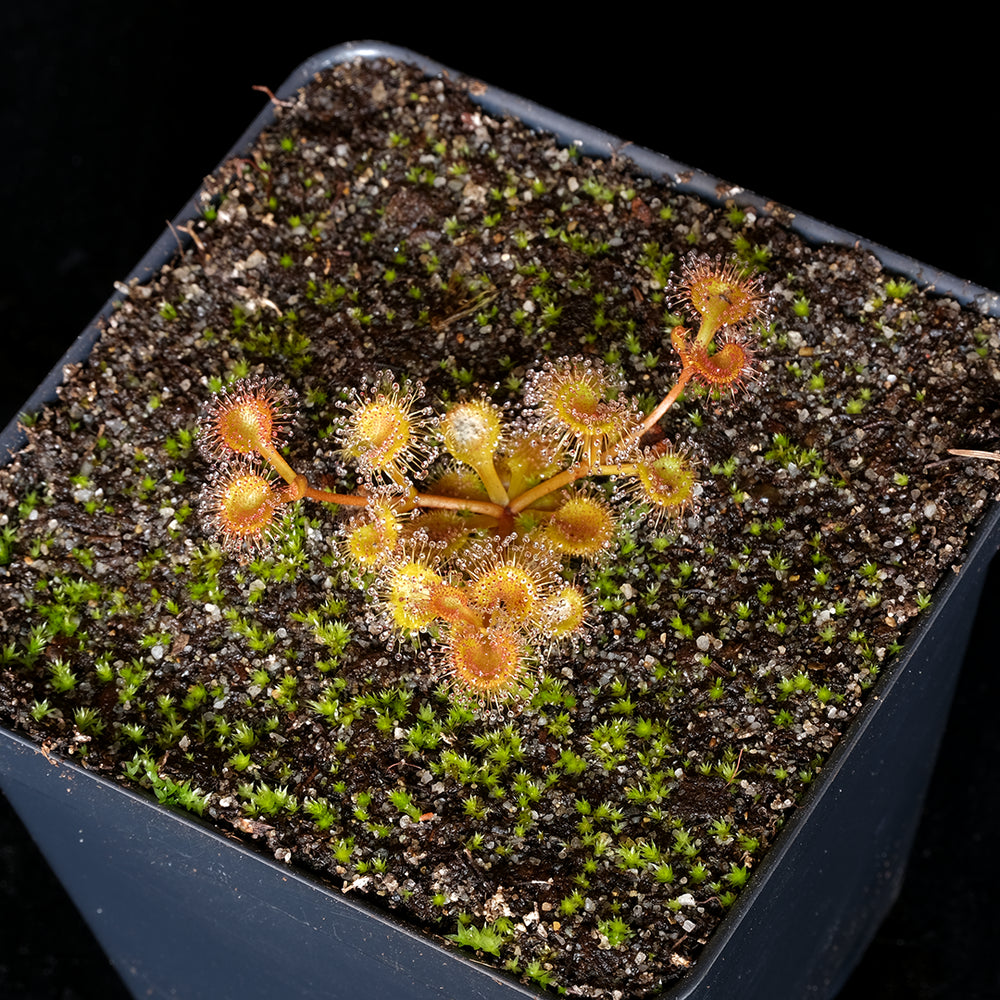
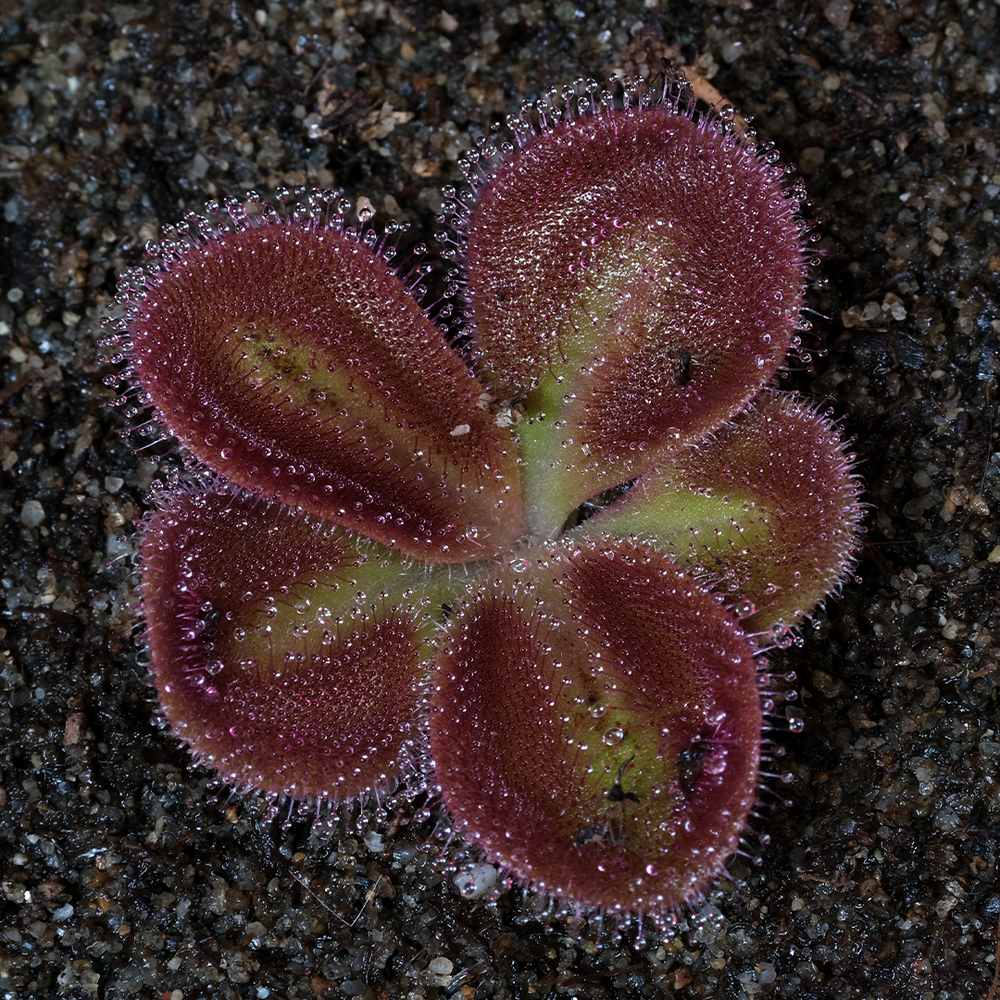
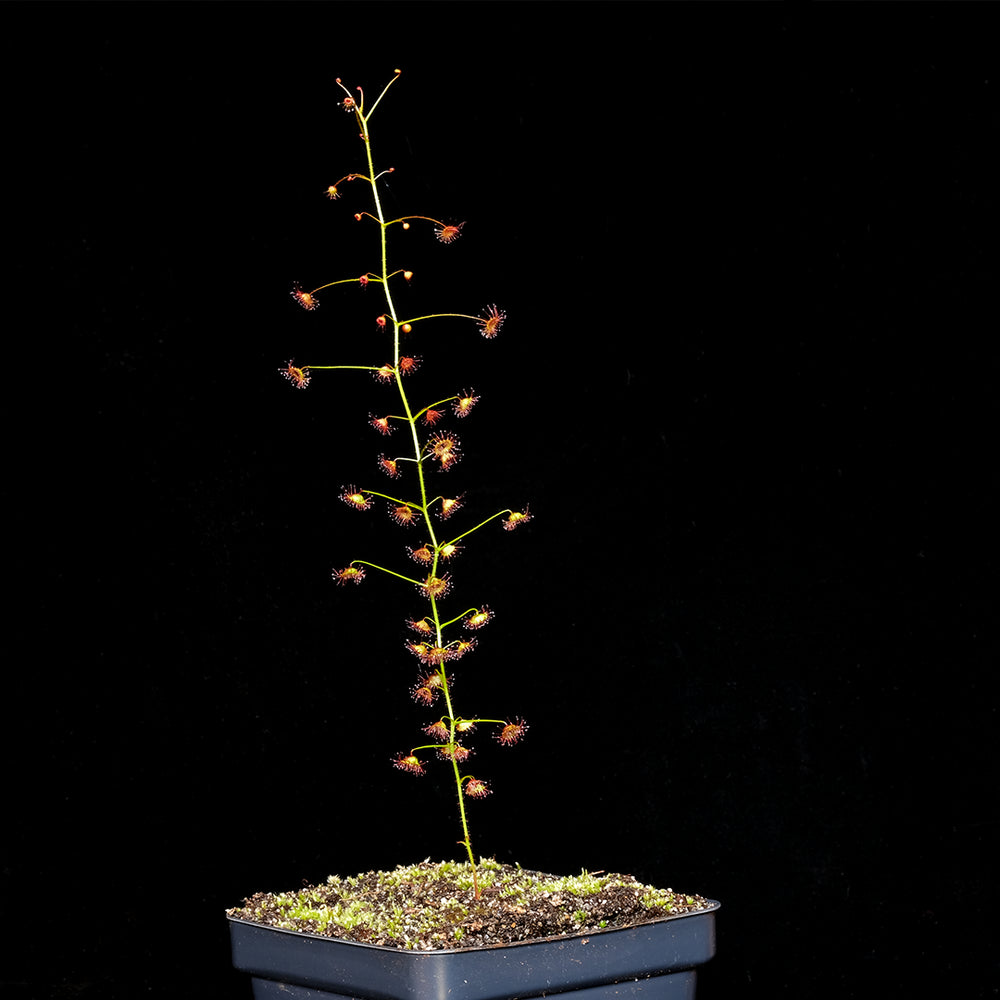
Winter growers currently available
Cool-season carnivores in the current catalog. Availability changes, and many winter growing species are only offered while they are in active growth.
view all carnivores ↗
004growing them
Growing them in four rules
Winter growing carnivorous plants can seem intimidating but are just as easy as other carnivorous plant species if you follow some simple rules.
-
Water on their calendar
Growth starts as the nights cool and runs through to spring. A good rule of thumb is to begin watering in September and taper off as the plants begin to retreat below the soil. When actively growing, they can be grown in water trays like most other carnivorous plants.
-
Feed almost nothing
The ground these come from is among the poorest on Earth, like the leached sand over laterite in south-western Australia or acidic sands on the Cape. Diluted carnivore-specific fertilizers can be carefully applied, but the plants usually do a great job of catching their own fertilizer.
-
Keep the dormant ones dry
Once a winter growing sundew has died back, the plants need very little water until growth resumes in the fall. However, splashing a bit of water on the dormant pots once a month in summer is a good idea to keep the tubers or roots from completely desiccating.
-
Shade in the summer
When dormant, put the pots in a shaded, cooler area. The soil in their natural habitat is a much better heat sink than a pot, and pots left in the sun can quickly become too hot for even the hardy tubers or roots to handle.
005reference
Questions about winter-growing carnivores
Which carnivorous plants are winter growers?
Mostly sundews: the tuberous Drosera of south-western Australia, and the winter-rainfall Drosera of the South African Cape region. A few species of Australian Utricularia also follow a similar growth cycle.
What does a winter growing carnivorous plant look like when it goes dormant?
In tuberous sundews and some Cape species, the leaves and stems turn brown and die away. By midsummer, all that’s left of the plant may be a living tuber or thickened roots below the soil.
Are they winter-hardy?
To a certain degree. They come from climates that have relatively mild winters and are hardy down to about freezing. Prolonged frosts are detrimental and hard freezes are lethal to most species. Check the minimum temperature in the listing, especially if you plan to leave the plant outdoors through winter.
Why isn’t California on the map?
Despite being a Mediterranean region, the carnivorous plants of California like Darlingtonia californica are found in habitats where water is always present, such as near rivers or permanently wet seeps.
When should I repot a tuberous sundew?
Summer dormancy is usually the easiest time, after the foliage has died back and before the tuber starts to sprout again. If you’re dividing an established plant, check all the way to the bottom of the pot. Some tubers work their way down there over a few seasons.
When are tuberous sundews available?
We offer tuberous sundews while they’re in active growth, usually from fall through spring. Our Drosera auriculata, D. macrantha and D. rupicola are grown from tuber offsets and sold as established plants. Early in the season, they may be smaller than the plants pictured.
Can you grow tuberous sundews indoors?
Yes, but with specific conditions. A grow light in a cool room works well during active growth. Pay attention to the temperature around the plants, especially if the lights are in an enclosed cabinet. Too much warmth can send some species into dormancy early.
Can I water tuberous sundews with tap water?
Rainwater, distilled water or reverse osmosis water are the safest choices. Tap water varies, and dissolved minerals can build up in the mix over time, especially in pots that sit in water trays for much of the growing season.
What soil should I use for tuberous sundews?
Plain sphagnum peat and washed silica sand make a good mix for many tuberous Drosera. Equal parts are a starting point. Species that grow in deep sand in the wild often do better with a sandier mix. Use peat without added fertilizer.


